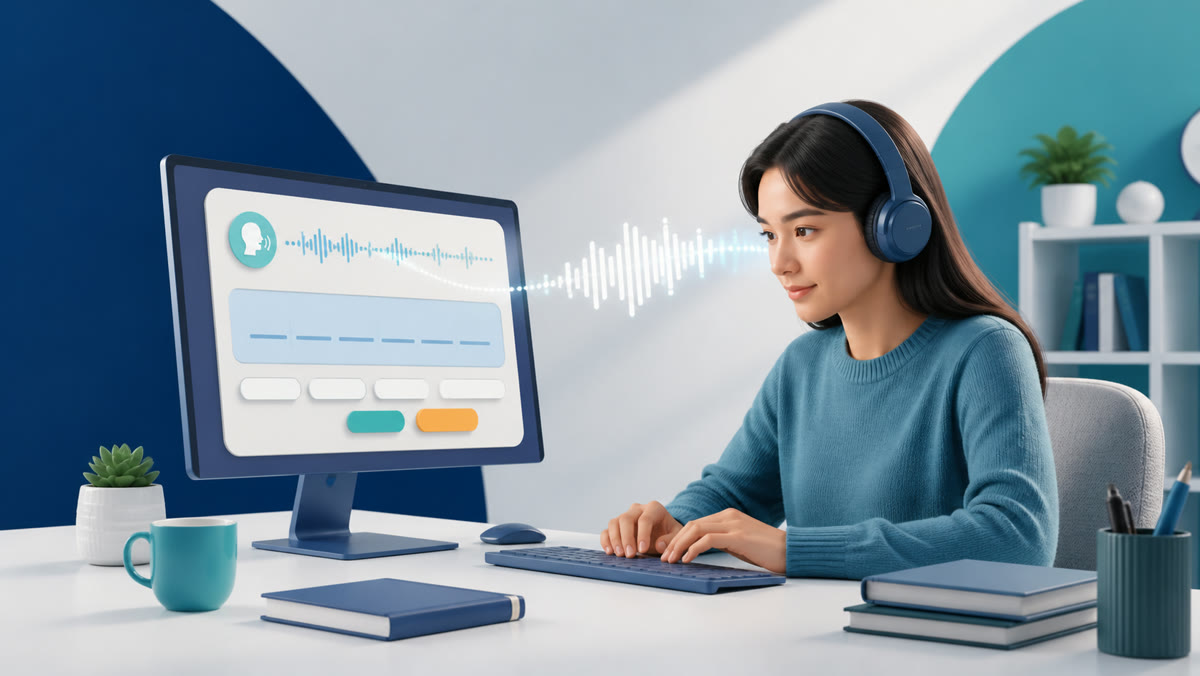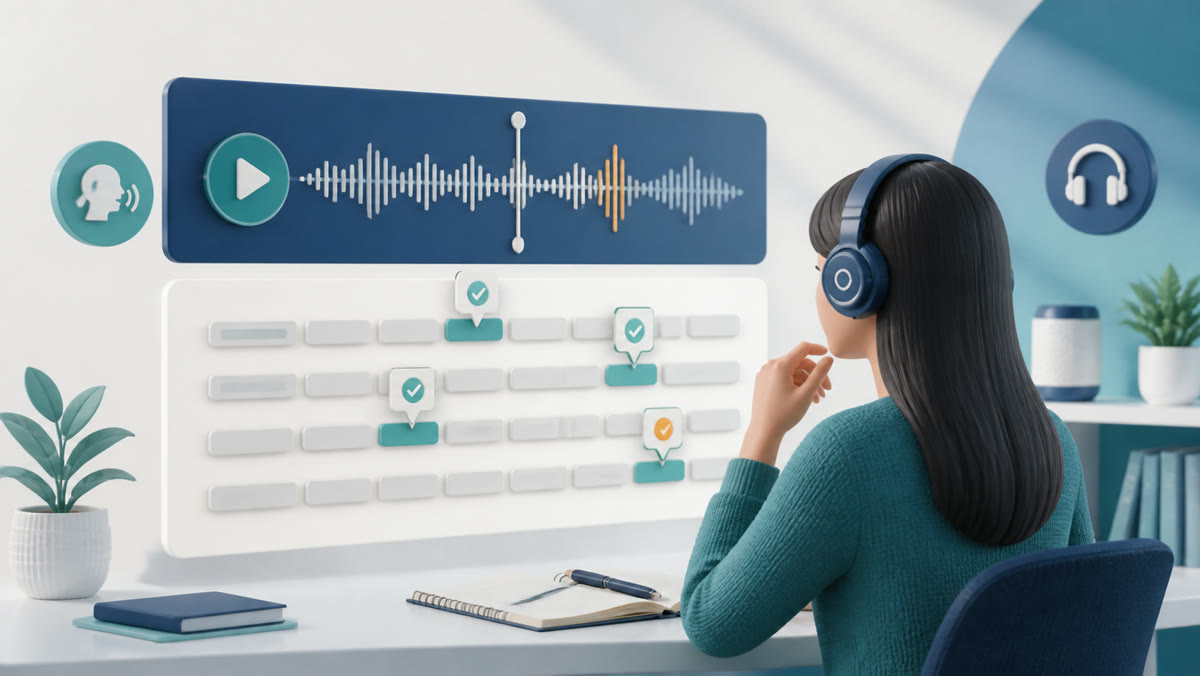
Follow the displayed transcript in synchrony with the once-only recording and click a word only when the audio clearly says something different. Accuracy matters because both current score guides award correct selections and deduct for wrong ones.
Current format
The transcript appears on screen and contains errors. While a 15–50-second Academic/UKVI recording plays once, you select displayed words that differ from the speech. Pearson lists Listening and Reading as assessed skills and no separate answer time.
The task also appears in PTE Core and contributes to Listening and Reading in its current Score Guide. Core’s format webpage currently repeats missing-word instructions under this heading; those copied instructions do not describe Highlight Incorrect Words. Use the correct task definition and your test screen, rather than importing the conflicting field as a confirmed Core timing.
How scoring works
For both Academic/UKVI and Core, the current score guides award one point per correctly identified mismatch and deduct one for a wrong selection, with a minimum item score of zero. Partial credit applies. A missed mismatch earns no point; selecting a word that actually matches the audio creates a deduction.
This makes restraint important. A vague suspicion is not enough reason to click, especially when accent or reduced speech makes a correct transcript word sound unfamiliar.
Use the preview to orient
Pearson provides a brief pre-audio window and advises skimming rather than trying to read every word. Identify the topic and visually locate information-rich nouns, verbs and adjectives.
Do not memorise the transcript. Your goal is to begin aligned and ready to compare sound with print.
Track with the cursor
Move the cursor along the words as the speaker reads. Click a mismatch and immediately return attention to the next spoken position. Notes add a second visual task and can cause you to lose alignment; Pearson recommends cursor tracking instead.
Distinguish a real vocabulary mismatch from pronunciation variation. The question is whether the spoken word differs, not whether it matches your preferred accent.
Original practice example
Displayed: “The new timetable reduced waiting times but increased operating costs.”
Imagined audio: “The new timetable shortened waiting times but increased operating costs.”
Click reduced, because that displayed word differs from shortened. Do not click increased, which matches. This is original practice content.
Worked transcript-matching exercise
Use the displayed passage below while a partner reads the separate audio script. Keep that script and the answer explanation hidden during your first attempt. This is an original short teaching exercise, not a live clickable Pearson task.
Displayed transcript:
Visitors should collect their tickets from the door near the main entrance. The guided tour starts at ten, and small bags must be left in the lockers.
Script for your partner to read once:
Visitors should collect their tickets from the desk near the main entrance. The guided tour starts at eleven, and large bags must be left in the lockers.
Which displayed words are incorrect?
| Select this word on screen | Spoken word | Reason |
|---|---|---|
| door | desk | Different collection point |
| ten | eleven | Different start time |
| small | large | Different description of the bags |
Do not select “tickets,” “entrance,” “tour” or “lockers”: those words match. The answer is the displayed mismatch, not the replacement word in the recording. You are not typing a corrected transcript.
All three correct clicks earn three raw points in this exercise. Those three clicks plus one false click earn two. One correct click with two false clicks reaches zero, not minus one. These counts illustrate the item rule, not a Listening or Reading score prediction.
A synonym can still be a mismatch
In the earlier example, “reduced” and “shortened” have similar meanings, but they are different words. This task tests sound-to-text agreement, not whether the displayed sentence is a reasonable paraphrase. Conversely, a familiar word spoken with a different accent is not automatically a mismatch.
If you lose your place, move to the current phrase and continue. Remaining on an uncertain earlier word can cause several later misses. In review, mark where alignment broke and whether a click or a difficult phrase triggered the problem.
Build tracking accuracy in practice
Use short public-domain or self-recorded passages with an edited transcript. Practise maintaining place through dense noun phrases, then review false clicks separately from missed mismatches. Group errors as lost alignment, sound discrimination, or impulsive selection.
That diagnosis is more useful than chasing a raw accuracy percentage without knowing why errors occurred.
Keep two counts in your practice log: missed mismatches and false clicks. If detection improves while false clicks rise sharply, you have not necessarily improved the task result. Review the reason for each doubtful selection rather than clicking more aggressively.
Listening Fill in the Blanks also requires transcript tracking, but asks you to type missing words. Listening multiple answers tests meaning selection rather than exact word matching. Use official resources for the current Academic or Core interface, and pronunciation practice to become more comfortable recognising connected speech.
Common mistakes
- Clicking the spoken replacement rather than the incorrect displayed word.
- Taking notes and falling behind the transcript.
- Clicking because an accent made a correct word sound different.
- Remaining on one doubtful word while later audio continues.
- Overselecting despite the wrong-selection deduction.
Frequently asked questions
Do I click the word I hear or the wrong word on screen?
Click the displayed transcript word that differs from what the speaker says.
Can incorrect clicks reduce the score?
Yes. Both current score guides give one point per correctly identified mismatch, deduct one per incorrect selection and set a minimum item score of zero.
Conclusion
Highlight Incorrect Words demands synchronised reading and listening. Skim for orientation, track continuously, click only clear mismatches, and train false-click control as carefully as detection.
Useful Resources & References
- Pearson PTE Academic and UKVI Listening format — official transcript interaction, prompt length, cursor advice and selection scoring (accessed 28 October 2026).
- Pearson PTE Core Listening format — current Core Listening task list including Highlight Incorrect Words (accessed 28 October 2026).
- Current Academic Score Guide
- 2026 Core Score Guide